Why Ammunition Supply Is a Preparedness Issue
The ammunition shortage of 2020–2022 changed how serious shooters think about their supply chain. Shelves that had been full for decades went bare practically overnight. Reloaders were somewhat insulated — but even they faced the same bottleneck: bullets. Factory cast bullets dried up alongside factory ammunition. The people who were truly insulated were the ones who could make their own bullets from raw material.
Bullet casting offers a supply chain that starts with raw lead — far more storable and obtainable than finished ammunition — and ends with a finished projectile. Add a reloading press, primers, powder, and brass, and you have a complete, self-contained ammunition supply chain.
The Complete Ammunition Self-Sufficiency Stack
- Brass — reloadable many times. Brass-pick at the range and build a stockpile.
- Primers — hardest to manufacture at home. Deep-store in bulk (5,000–10,000 count). Store safely for decades in cool, dry conditions.
- Powder — best deep-stored. A few pounds covers a lot of rounds for common calibers.
- Bullets — this is where casting comes in. Lead stores indefinitely, and a 1,000 lb supply represents tens of thousands of finished bullets.
Key point: Of the four components of a cartridge, bullets are the only one you can manufacture yourself at practical scale with accessible equipment. Casting closes the loop.
Lead as a Storable Raw Material
Indefinite shelf life — lead doesn't degrade or expire. Ingots stored properly will be just as usable in 50 years as they are today.
High energy density — lead is heavy. A 500 lb lead supply in a 4x4 ft area represents 200,000+ small caliber bullets.
Recoverable — lead bullets fired into a proper bullet trap can be recovered and remelted. Same lead, over and over.
Secondary sources — wheel weights, plumbing scrap, range scrap. More obtainable than powder or primers in a real supply disruption.
Hobbyist vs. Production-Grade for Preparedness
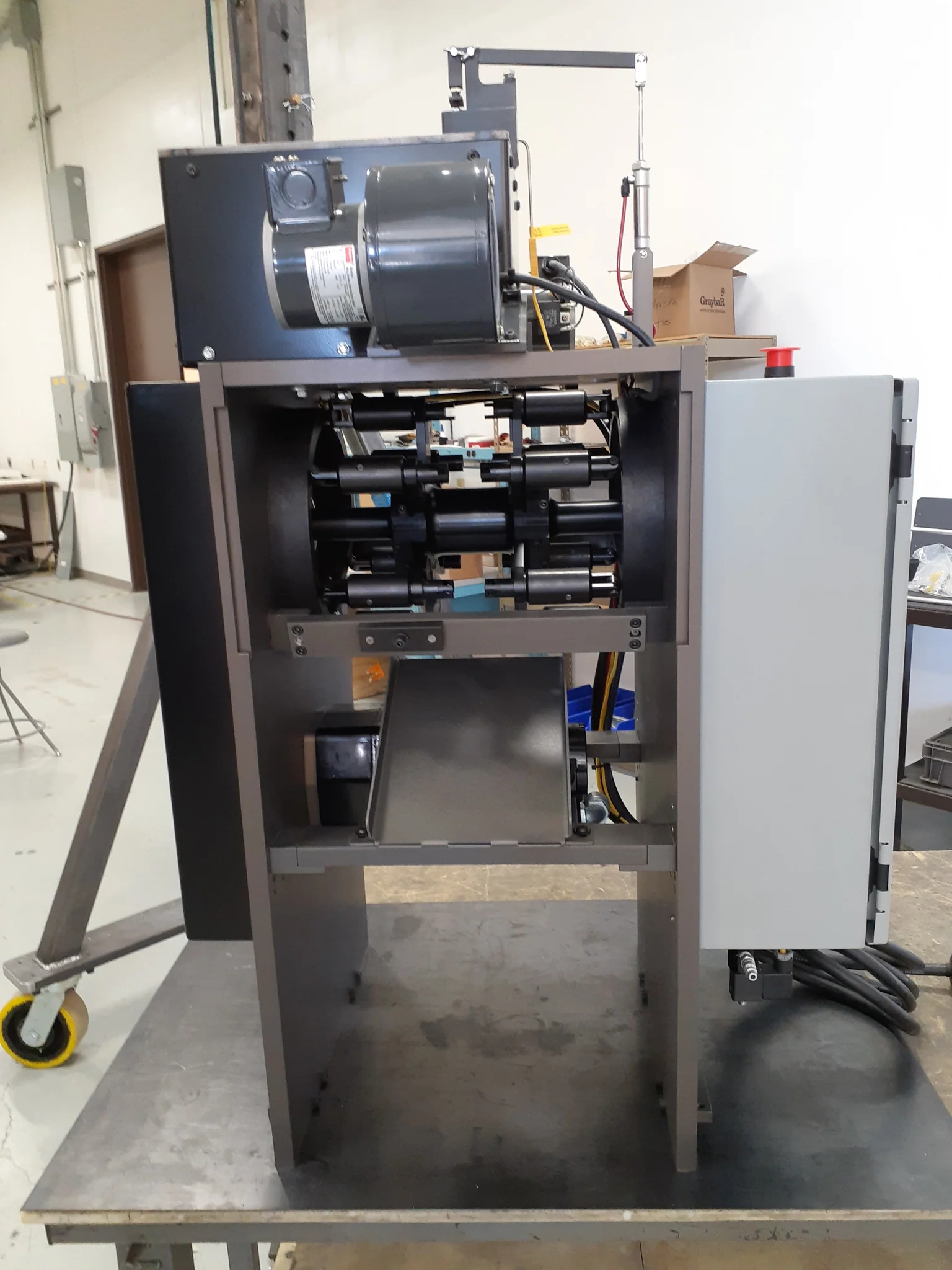
A hand-operated pot and single mold produces 100–200 bullets per hour — fine for personal use. But in a scenario where you're maintaining supply for a group or trading bullets as a commodity, 200/hour barely keeps up with consumption. An ACE M2R at 5,000 bullets/hour for an 8-hour run produces 40,000 bullets — enough to build a serious stockpile fast or supply an entire community over time.
Production-Grade Casting Equipment
The only American-made automatic bullet casting machines. Up to 5,000 bullets/hr.
Practical Setup for Self-Sufficiency
Minimum viable (personal use) — bottom-pour pot furnace, 2–3 molds in primary calibers, hand-operated sizer, 500–1,000 lbs lead in storage. Cost: $500–$1,500.
Serious preparedness (group or community supply) — ACE Speed Caster 42 or M2R, ACE Vortex Sizer, 6–10 molds across primary defensive and hunting calibers, 2,000–5,000 lbs certified pure lead, separate smelting setup for scrap processing.
Lead Recovery — The Closed-Loop System
Cast lead bullets fired into sand, dirt, or a purpose-built backstop can be recovered, cleaned, smelted, and recast. This is the ultimate self-sufficiency loop — the same lead serves indefinitely. Your real consumables are primer, powder, and brass — and brass cycles many times too.
Bullet Casting as a Tradeable Skill
The ability to cast bullets has real trade value in any community where shooting is common. An operation capable of producing 5,000 bullets per hour can sustain both its own supply and a meaningful trade operation. This is why the business startup guide is directly relevant to the preparedness community — what starts as self-sufficiency can easily become income.
Nick at American Casting Equipment offers in-person demonstrations at our Missouri and Minnesota facilities. Call 636-221-5950 to schedule a visit — there's no better way to understand what production-grade casting looks like than seeing it run.